Why San Diego Is a Hotspot for Basketball Club Teams
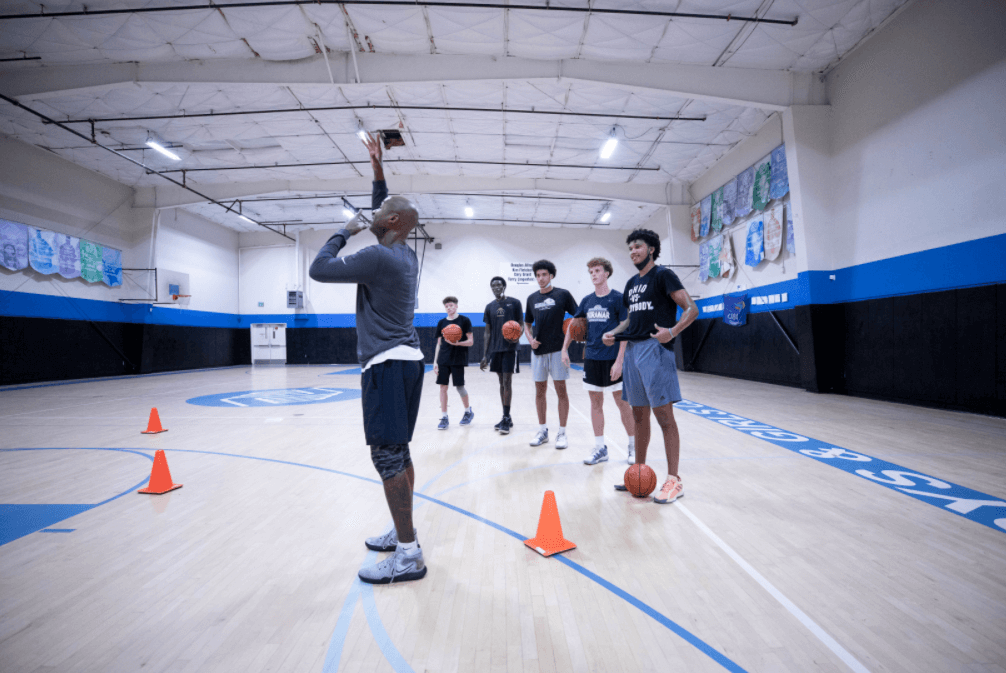
San Diego has become one of those places that keeps showing up in conversations about youth basketball, and not by accident. The region offers a rare mix of weather, population growth, gym access, family investment in sports, and year-round competition that makes club basketball unusually sustainable. If you spend enough time around the game here, at local gyms, weekend tournaments, school open runs, and training sessions that start before sunrise, you start to see why so many programs have taken root and why families are willing to commit to them.
The phrase Basketball Club Teams San Diego gets searched online for a reason. Parents are looking for more than just a place for their child to play on weekends. They are looking for structure, coaching, exposure, development, and a basketball environment that feels serious without becoming reckless. Players, especially from middle school through high school, want reps against good competition. Coaches want dependable facilities and a broad enough talent pool to field teams at multiple age levels. San Diego gives all three groups enough of what they need to keep the ecosystem moving.
What makes the city especially interesting is that it did not earn its reputation through one single powerhouse club or one sudden wave of talent. It built momentum through layers. Grassroots development, private training, school basketball culture, travel ball demand, and a steady stream of tournaments all reinforced one another over time. The result is not a fad. It is an infrastructure.
A year-round climate changes everything
Weather sounds like a soft factor until you compare it to places where a winter storm can wipe out a practice week or where summer heat turns outdoor training into a risk management exercise. In San Diego, players can train almost every month of the year with far fewer interruptions. That consistency matters more than people realize.
Basketball development comes from volume and rhythm. A player who gets 10 quality months in a year, instead of six or seven, improves faster. Teams that can count on stable practice schedules build chemistry sooner. Trainers can run small-group sessions before school, after school, and on weekends without constantly reshuffling because of weather or closed facilities. Even outdoor courts play a role. They are not a replacement for gym work, but they create another layer of access, especially for players who want extra ballhandling, conditioning, or shooting reps beyond official team practices.
This is one reason Basketball Club Teams San Diego have remained so active across age groups. The local environment supports repetition, and repetition is the real engine of player growth. In basketball, development usually looks less dramatic than people imagine. It is not one breakthrough moment. It is hundreds of quiet sessions where footwork gets cleaner, reads get quicker, and confidence stops wavering.
The talent base is broader than outsiders expect
San Diego is sometimes overshadowed in basketball conversations by Los Angeles, the Bay Area, or even certain Inland Empire programs. That can lead people to underestimate how deep the local player base actually is. The city and surrounding county offer a large, diverse population spread across communities that care deeply about youth sports. Add in military families, transplants from other basketball regions, and a steady stream of multi-sport athletes, and the talent pool starts to look much more substantial.
The best club markets are not built only on elite prospects. They are built on layers of players. You need high-end talent at the top, but you also need strong middle tiers, committed developmental players, and families who are willing to invest time and money into a long season. San Diego has all of that. Some clubs can field top teams that compete against major regional programs, while others do strong work with players who are trying to move from recreational basketball into something more competitive.
That range matters. It means the local basketball culture is not reserved for the top 1 percent. There are entry points. A late-blooming seventh grader can still find a serious team. A high school freshman who needs confidence and reps may get better value from a well-coached local club than from sitting at the end of the bench on a bigger-name roster. Strong basketball markets usually have that kind of ladder, and San Diego does.
Club basketball fits the region’s family culture
San Diego families are busy, but many are also accustomed to structured extracurricular commitments. Club soccer, volleyball, baseball, softball, and swimming have long had a strong presence here. Basketball benefits from that culture. Parents already understand what travel sports demand. They know weekends may disappear into tournaments. They know real development takes months, not one camp. They know coaching quality matters more than flashy branding, at least once they have enough experience to separate the two.
That baseline understanding helps club programs survive. Families in the area are often willing to pay for training, tournament fees, uniforms, and transportation if they believe the return is real. The key phrase there is if they believe. San Diego parents are not passive. They compare programs. They talk to other families. They watch how coaches interact with bench players, not just stars. They pay attention to whether practices are organized or chaotic, and whether a team actually develops over a season.
In practical terms, that creates a healthier market. Programs that provide value tend to last. Programs that overpromise and underdeliver may still attract families for a season, but word gets around. In a connected basketball community, reputation matters.
There is enough competition to make development honest
A weak local scene can make average teams feel elite. A strong scene does the opposite. It exposes gaps quickly.
That is one of the major advantages of San Diego. Club teams in the area have regular access to meaningful competition, both locally and in nearby regions. A team can play solid opponents within the county, then test itself against Orange County, Los Angeles, Riverside, or national travel events without requiring extreme travel. This creates a more truthful development environment. If your guards cannot handle pressure, the schedule will reveal it. If your bigs are undersized, you will find out fast. If your team only scores in transition and cannot execute in the half court, that weakness will show up by the second or third tournament.
For good coaches, that is useful information, not bad news. It gives them a chance to adjust systems, roles, and training priorities before a player reaches a more critical stage in high school recruiting. I have seen many teams improve most after ugly tournament weekends. Not because losing is magical, but because quality competition strips away illusion. You leave with game film, bruised pride, and a much clearer sense of what needs work.
San Diego sits in a particularly favorable geographic lane for this kind of testing. The city is large enough to support its own basketball identity, but close enough to larger tournament circuits that teams are never isolated.
The training economy around the game is unusually mature
A healthy club scene almost always grows alongside a healthy training scene. San Diego has that. Private skills trainers, shooting coaches, strength specialists, sports performance staff, recovery providers, and position-specific instructors all contribute to the larger basketball ecosystem. Not every trainer is exceptional, and families still need discernment, but there is enough supply that players can usually find targeted help.
This matters because club coaches cannot do everything. Even excellent teams only practice a few times a week. A player trying to tighten a release, improve lateral quickness, or add functional strength often needs extra work outside team sessions. In San Diego, that support is widely available.
The best cases are when club coaches and trainers complement each other instead of competing for authority. A smart trainer reinforces footwork, pace, and decision-making that show up in games. A smart club coach appreciates that the extra reps can accelerate progress. Problems arise when a trainer teaches flashy moves that do not translate, or when a club treats outside instruction like a threat. But when the alignment is right, players benefit quickly.
You can see it in the polish of many local players. Even younger athletes often arrive with advanced handling packages, cleaner shooting mechanics, and a better understanding of space than you would expect from age alone. That is not accidental. It reflects hours spent in gyms across the county long before and after official team practices.
School basketball and club basketball feed each other
In some cities, high school coaches and club programs exist in tension. In San Diego, that tension certainly exists in spots, but there is also a productive overlap. Strong school programs create hungry players who want off-season development. Strong club programs prepare players to contribute more meaningfully when school season arrives. The relationship is not always perfectly smooth, but it is real.
For a high school player, club basketball can serve several purposes at once. It offers more live reps, exposure to different coaching styles, and competition against players from outside the school league structure. It can also help an athlete rebound from a disappointing school season. Maybe a sophomore did not earn the role he expected. Maybe a junior needs to show college coaches that his school system is not the best measure of his game. Club ball gives those players another platform.
From the school side, coaches often benefit when their athletes spend spring and summer facing better speed and physicality than they see in league play. Players return sharper. They process help defense faster. They are less rattled by pressure. They have seen enough varied schemes that basic varsity actions stop feeling overwhelming.
This is one reason Basketball Club Teams San Diego remain central to serious player development. They are not replacing school basketball. They are extending it, sharpening it, and in many cases making it more meaningful.
Facilities, while imperfect, are good enough to sustain volume
No basketball city has perfect gym access. San Diego certainly does not. Scheduling is competitive, rental costs can be high, and some programs spend a lot of time piecing together practice slots across school gyms, recreation centers, churches, and private facilities. Still, the region has enough usable court space to support a large number of teams.
That phrase, enough usable court space, matters more than luxury. Players do not need pristine arenas for development. They need consistent baskets, clean floors, decent lighting, and predictable practice times. The best clubs manage logistics well enough that players and parents can build routines around them.
Weekend tournament sites across the broader Southern California area also make it easier for San Diego-based programs to stay active without unreasonable travel burdens. A one- to two-hour drive is normal in club basketball. That is not ideal for every family, but it is manageable compared with markets where serious competition requires flights or long overnight trips several times a season.
Facility access remains one of the biggest differentiators between stable clubs and struggling ones. Teams with reliable court time practice better, retain families more easily, and create a more professional atmosphere. In San Diego, enough organizations have solved that puzzle to keep the market strong.
The region attracts players who want both basketball and balance
One subtle advantage San Diego has is lifestyle. Families relocating from colder states or more congested cities often view the area as a long-term place to settle. Athletes can train seriously here while still living in a city that offers beaches, good schools in many areas, and a generally active culture. For families raising competitive athletes, that balance has real appeal.
Not every player wants the intensity of a basketball-only environment where the sport dominates every corner of local life. Some do thrive in that setting, but others improve more in places where pressure is present without becoming suffocating. San Diego tends to hit that middle ground. https://alexisgvzr667.hexaforgey.com/posts/basketball-club-teams-san-diego-that-focus-on-holistic-athlete-development The basketball is serious, but the wider culture gives kids room to breathe.
That balance can be especially helpful for younger players. Burnout is real in club sports, and basketball is no exception. Athletes who train year-round still need mental variety, social stability, and occasional downtime. A region that makes active living easy can support that better than a place where every free hour is trapped indoors.
Not all club opportunities are equal, and that is part of the story
A hotspot for club basketball is not automatically a simple market to navigate. San Diego has strong programs, developmental programs, startup programs, and some that lean more on marketing than substance. The abundance of options is a strength, but it can also confuse families who are new to the space.
The strongest clubs usually share a few habits. They communicate clearly, practice with purpose, schedule appropriately for their level, and define roles honestly. They do not promise exposure to every player, because exposure without readiness is mostly theater. They also tend to have coaching staffs that understand the difference between winning a 12U weekend bracket and building a player who can handle varsity or college-level demands later.
Families evaluating Basketball Club Teams San Diego often focus first on brand recognition. That is understandable, but it is not enough. A famous logo cannot fix a poor fit. A player who needs reps and confidence may do better on a second team with serious minutes than on a top roster where he rarely gets on the floor. On the other hand, some players need the daily pressure of a stronger practice environment even if game minutes come slowly at first. Good decisions depend on the athlete, not just the label.
Here are a few signs a club is operating with substance rather than hype:
- Practices have structure, pace, and teaching points that carry into games.
- Coaches can explain a player’s role and development plan without vague promises.
- Tournament schedules make sense for the team’s level and goals.
- Communication with families is timely, direct, and professional.
- Players improve over a season in visible, measurable ways.
That sounds straightforward, but many families skip those basics because they get distracted by social media clips or broad claims about recruiting connections. Experience usually teaches them to look deeper.
Exposure matters, but development matters more
Club basketball conversations often drift toward recruiting, especially once players reach the high school years. San Diego benefits from being close enough to major events that college exposure is realistic for the right athletes. At the same time, the market is healthiest when exposure is treated as a byproduct of real growth rather than the main product being sold.
College coaches do not get impressed by branding alone. They look for size, movement, skill, feel, competitiveness, and consistency. They also care about context. How does a player respond after a turnover. Can he defend multiple actions. Does she make timely decisions, or just dominate the ball. Those traits become visible in strong club settings because the level of play is demanding enough to reveal them.
This is where San Diego’s club ecosystem helps serious prospects. Players can sharpen their games locally, then compete in stronger circuits without needing to leave the region entirely. They get opportunities to be seen, but they also get enough training volume to deserve being seen.
There is also an important reality check here. Most club players are not headed to high-major college basketball. That does not make the experience less valuable. Good club programs teach discipline, communication, time management, resilience, and how to contribute within a team. For many athletes, those lessons matter as much as any recruiting outcome.
The city’s basketball future looks durable
Some youth sports markets burn hot for a few years and then fade when facilities change, family priorities shift, or too many weak programs dilute the space. San Diego looks more durable than that. The demand base is strong, the climate supports constant activity, nearby competition remains deep, and the broader youth sports culture is already established.
There will always be pressure points. Gym space will stay expensive. Families will continue weighing cost against value. Coaches will wrestle with balancing development and winning. Players will move between teams, sometimes too often. Those are normal frictions in any active club scene.
But the fundamentals are sound. San Diego offers enough serious players, informed families, committed coaches, and training resources to keep club basketball thriving. The city is no longer a secondary mention in the Southern California basketball map. It is a central part of it.
For players trying to improve, that is good news. For coaches building meaningful programs, it is a real opportunity. And for families searching for Basketball Club Teams San Diego, it explains why the options are plentiful and why the best organizations here have become such an important part of the region’s sports identity.
Lamont Smith Basketball Academy
888 Clairemont Mesa Blvd Suite T-2, San Diego, CA 92123
(619) 639-8778
FAQ About Basketball Club Teams San Diego
How can a player join an LSBA club team?
Players are evaluated during practices so the coaching staff can recommend an appropriate team and development level. Families should contact the academy to confirm current openings and evaluation details.
Are club teams available for newer basketball players?
Yes. LSBA describes multiple levels, including a developmental option for newer players as well as more competitive teams for athletes with prior club experience.
What do LSBA club team practices emphasize?
Practices emphasize basketball fundamentals, team defense, structure, communication, and player development. The specific focus may vary according to the team and experience level.
Do all LSBA teams travel?
Travel expectations vary by level. Some teams focus on local competition, while advanced teams may participate in tournaments elsewhere in Southern California or beyond. Families should confirm the current schedule before enrolling.